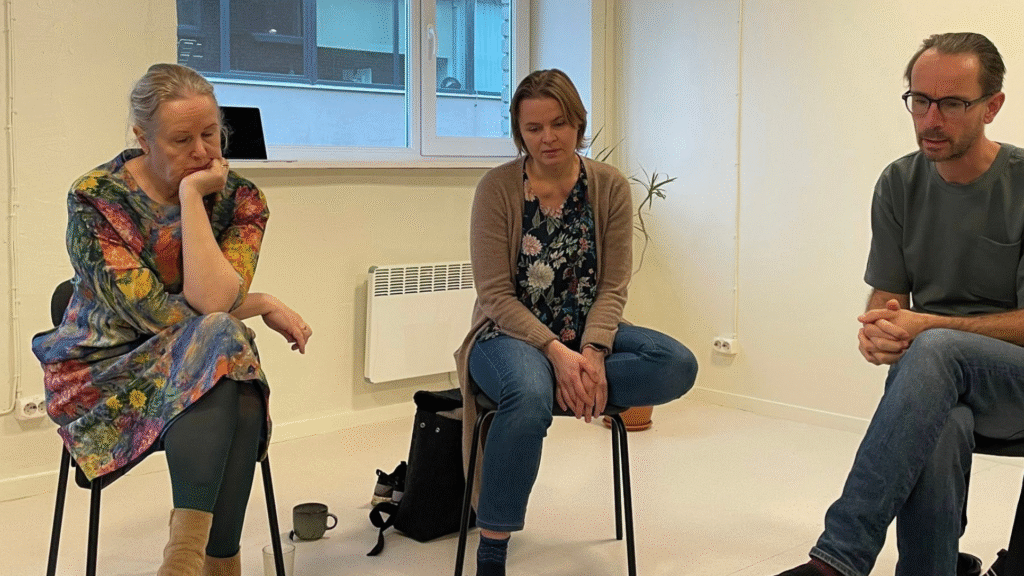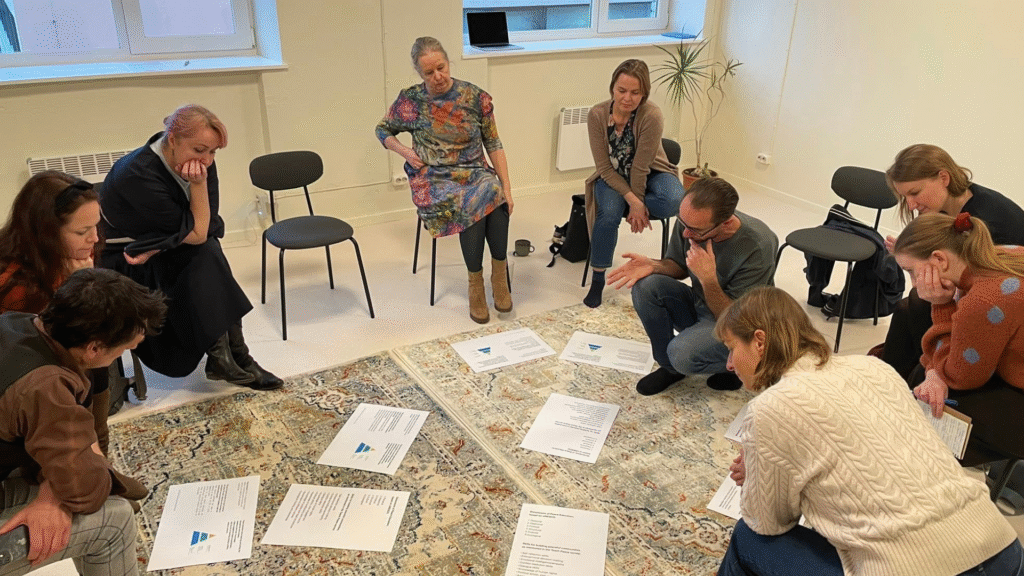
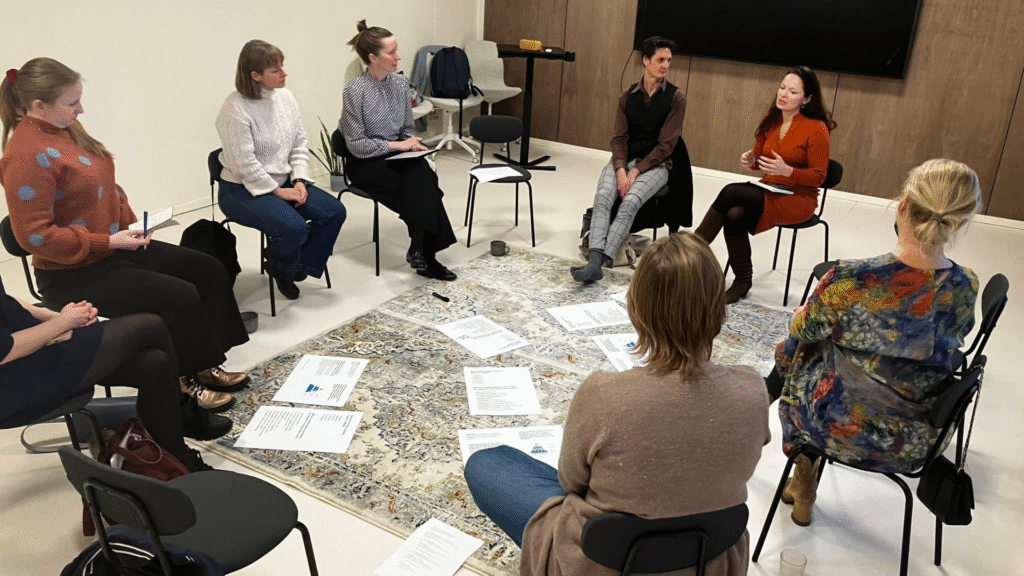
On 2 December 2025, a small group of adult educators and peace education promoters met at the Estonian Dialogue Academy in Tallinn for a group dialogue as part of the Teach Peace project, which aim is to develop a peace education training programme for adults.
Eight participants from different organisations and fields in Estonia reflected on peace education as a way of understanding other people’s perspectives, practicing peaceful and non-violent communication, and using dialogue as a form of “thinking together”. They connected its growing importance to rising polarisation in society and future challenges related to the economy, technology, security, and migration. 
The conversation also linked peace education to the idea of a compassionate future — living respectfully with others. Participants explored existing approaches, including Mondo’s online peace education for youth workers and UNESCO’s framework with six dimensions (personal, relational, political, structural, cultural, ecological) and a wide range of skills such as self-reflection, critical thinking, dialogue, deliberation, and citizenship education.
As the group went deeper, a key question emerged: from what “place” is peace education being developed today? In times marked by fragility and uncertainty, the discussion highlighted the relevance of self-supporting skills, psychological well-being, and the importance of critical thinking.
The dialogue sessions will continue in spring 2026 to explore what a meaningful peace education training for adults could look like.